Spaßvogel
Aleksandr Grechaninov (1864-1956) · General Knowledge study guide
← All General Knowledge guidesAMEB Grade 3 General Knowledge
A score-based guide for the General Knowledge section of AMEB Cello Grade 3, using the cello part.

Notes and rests
Note values
| Value | Relationship |
|---|---|
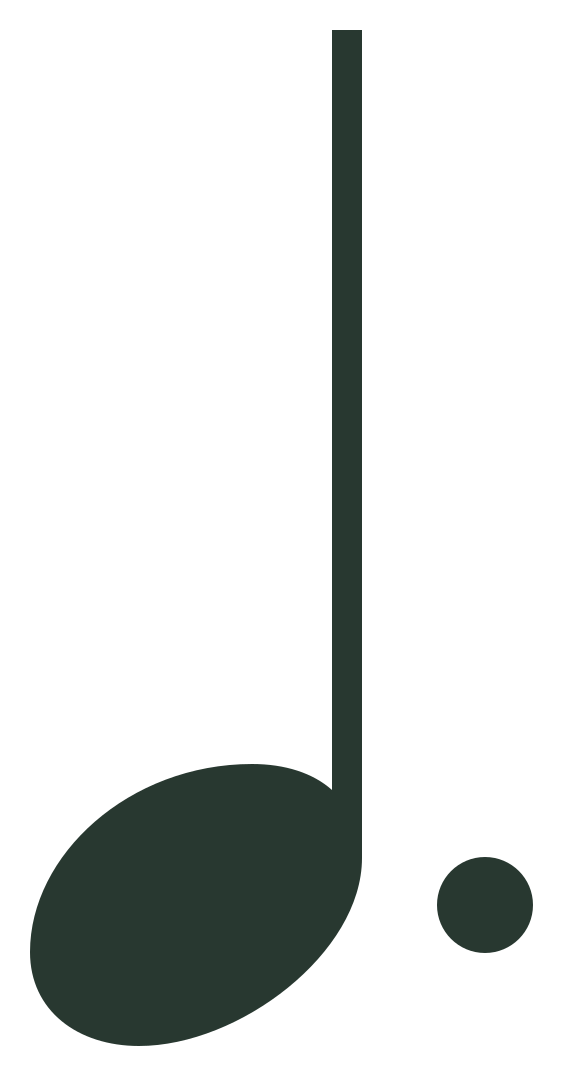 Dotted crotchet Dotted crotchet | Equal to three quavers. |
 Crotchet Crotchet | Equal to two quavers. |
 Quaver Quaver | Half the value of a crotchet. |
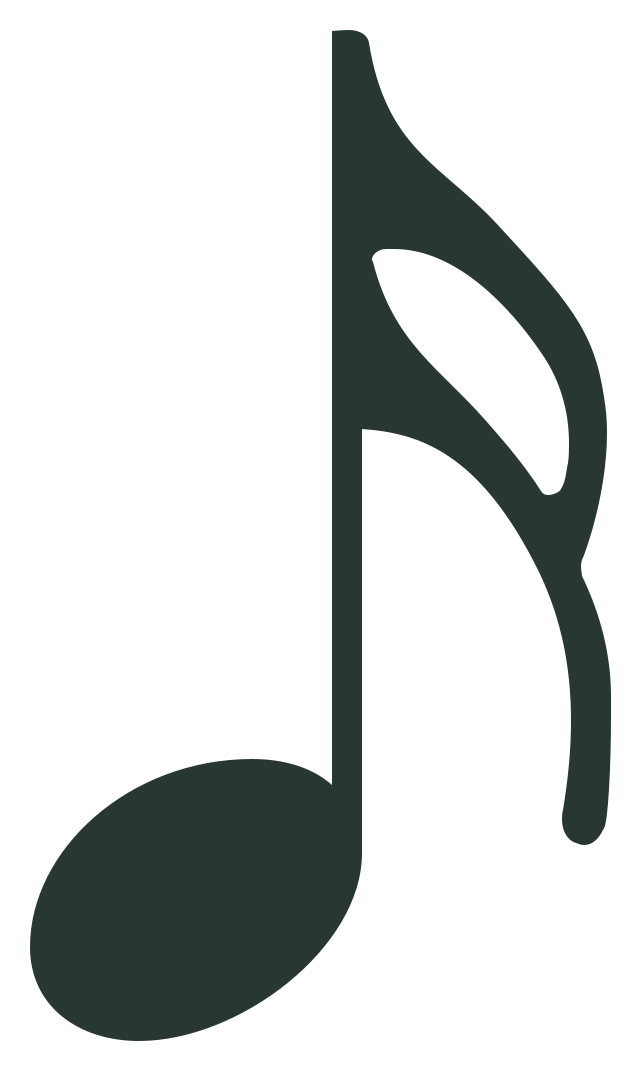 Semiquaver Semiquaver | Half the value of a quaver. |
Rest values
| Value | Relationship |
|---|---|
 Quaver rest Quaver rest | Silence for the value of one quaver. |
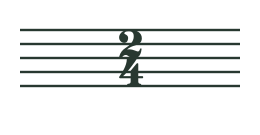
2/4 time: two crotchet beats in a bar. Each quaver is half a beat and each semiquaver is a quarter of a beat. The dotted crotchet in bar 24 lasts one and a half beats.
Signs, terms and symbols
| Marking | Meaning | Where |
|---|---|---|
| Allegretto | Allegretto: moderately fast. | Beginning, Allegretto grazioso |
| Metronome mark: 76 crotchet beats per minute. | Beginning |
| riten. | Short for ritenuto: immediately slower; held back. | Bar 24, first note |
| a tempo | A tempo: return to the previous tempo. Here, resume the opening tempo after the riten. in bar 24. | Bar 25 |
 | Piano: soft. | Bar 25; also bar 29 |
 | Mezzo forte: moderately loud. | Bar 1, first note |
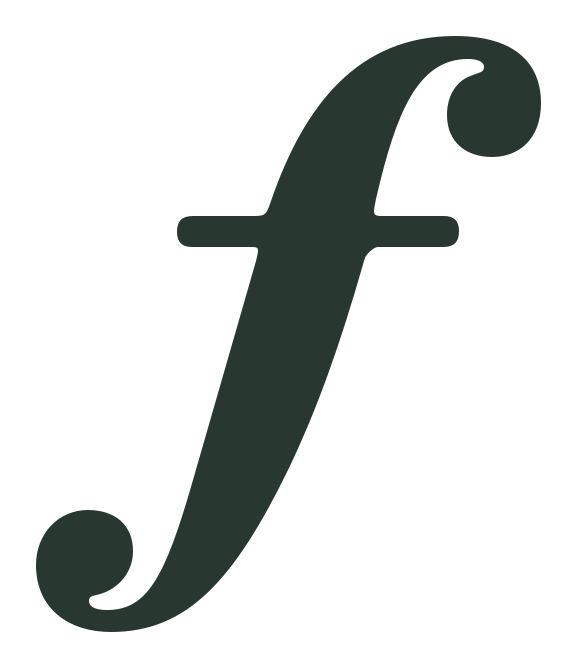 | Forte: loud. | Bar 4 |
 | Sforzando: give the marked note or chord a sudden strong emphasis. In bar 40, both the second main quaver and the double stop on the second beat are marked sf. | Bar 40, second and third main quavers |
| Grazioso | Grazioso: gracefully. | Beginning, Allegretto grazioso |
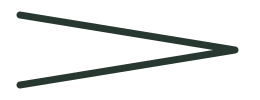 | Diminuendo: gradually become softer. | Bar 24 |
 | Accent: give the note extra emphasis. The quavers in bar 4 also have staccato dots, so play them short and detached as well as emphasised. | Bar 4, all four quavers |
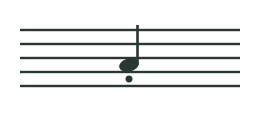 | Staccato: play the note short and detached. | Bar 1, first note |
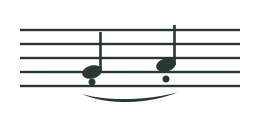 | Staccato under a slur: play the two marked notes in one bow, with a short separation between them. | Bar 18, first two quavers; also bar 22 |
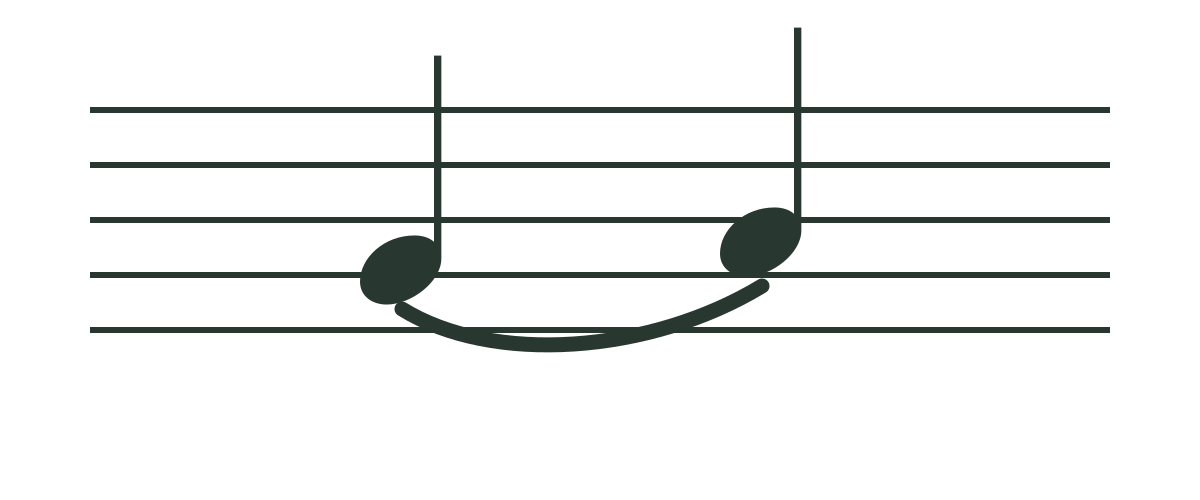 | Slur: play the notes smoothly in one bow. | Bar 2, first four semiquavers |
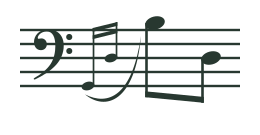 | Grace notes: small notes leading into the main note. Here, the two small semiquavers, G and D, lead into B. Together they form a spread G-major chord. | Bar 40, before the first main quaver |
| 0 1 2 3 4 | Fingering: numbers show which left-hand finger to use. This part uses 1, 2 and 4. The 0 in bar 20 means an open string. | Bar 18; open-string 0 in bar 20 |
| x4 | Extension fingering: the x before 4 asks for an extended position. Here, use the fourth finger to play F sharp in the extended position. | Bar 18, second quaver |
| I | I (first string): play on the A string. Here, the 0 above the normal notehead tells you to use the open A string. | Bar 20, second crotchet beat |
| II | II (second string): play on the D string. Here, lightly touch its A position to produce the natural harmonic. | Bar 20, second crotchet beat |
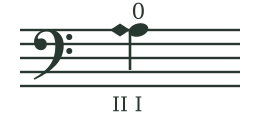 | Double stop with a natural harmonic: play the open A string and lightly touch the D string at its A position. The normal notehead sounds the open A; the diamond gives the touching position on the D string, producing an A one octave higher. The two noteheads are written at the same height but sound an octave apart. | Bar 20, second crotchet beat |
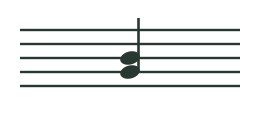 | Double stop: two notes sounded at the same time. In bar 20, one is a harmonic. The double stop on the second beat of bar 32 uses ordinary noteheads and sounds G in two octaves. | Bar 20, second beat; ordinary double stop in bar 32 |
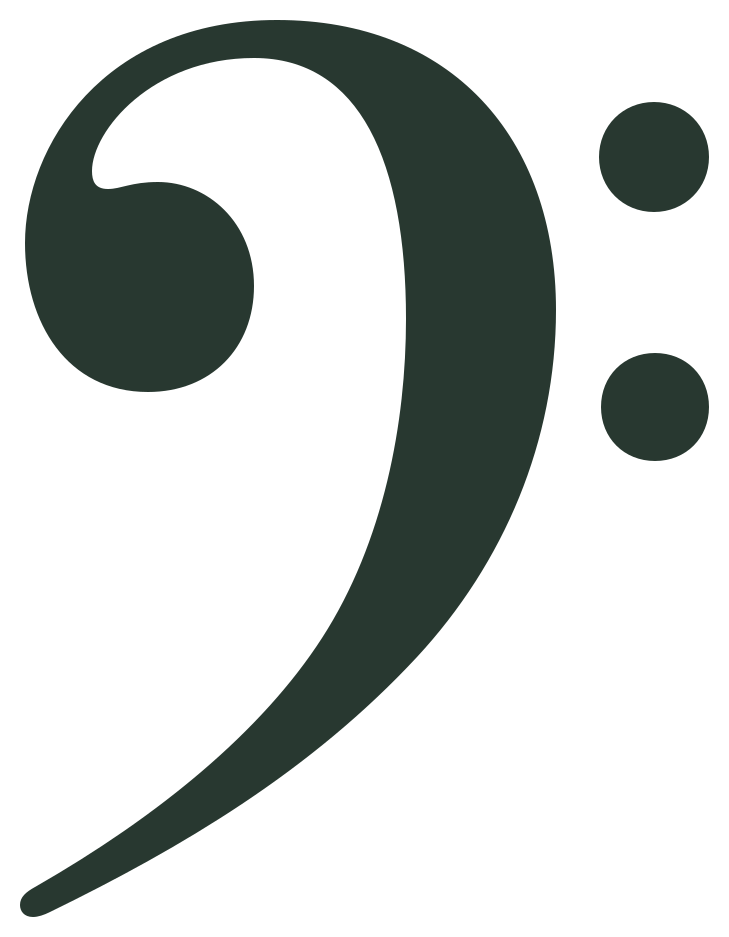 | Bass clef (F clef). | Beginning |
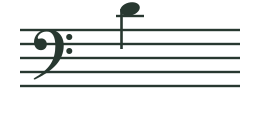 | Ledger line: a short line that extends the staff for notes above or below it. The D in the second quaver of bar 1 is written above the staff with a ledger line beneath its notehead. | Bar 1, second quaver |
 | Sharp: raises a written note by one semitone. The key signature makes every F an F sharp. The C sharp accidental in bar 17 belongs to the passage in D major. | Key signature; C sharp first appears in bar 17 |
| 2/4 time: Two crotchet beats per bar. | Beginning |
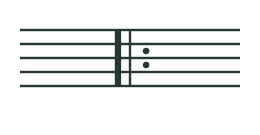 | Start repeat sign: the place to return to when you reach the matching end repeat sign. Here, the repeated passage begins at bar 17. | Beginning of bar 17 |
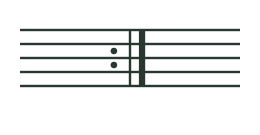 | End repeat sign: go back to the matching start repeat sign. Here, return to bar 17 and play bars 17 to 32 again, then continue to bar 33. | End of bar 32 |
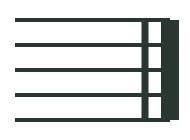 | Marks the end of the piece. | End of bar 40 |
The repeat signs enclose bars 17 to 32. The AMEB edition states that repeats are not required for examination purposes.
Key and tonality
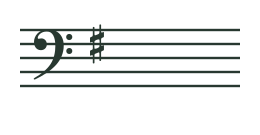
Key: G major.
Key signature: F♯.
Key changes: Contrasting passage, from bar 17: D major; Return of the opening melody, bar 25: G major
D major is the dominant key of G major. Its C sharps appear as accidentals in bars 17 and 21; the printed key signature remains one sharp.
The contrasting passage leads back towards G major before the opening melody returns at bar 25.
About the title
Spaßvogel is German for "joker" or "jester". The piece is No. 3 from In aller Frühe, meaning "early in the morning".
Form
Ternary form (A-B-A)
| Bars | Section | Key | What to notice |
|---|---|---|---|
| 1 to 16 | A | G major | Opening eight-bar melody heard twice |
| 17 to 24 | B | D major, leading back to G major | Higher register and C sharp accidentals |
| 25 to 40 | A | G major | Opening melody returns softly at a tempo |
Exam-style questions
- What does the German title Spaßvogel mean?
Show answer
A joker or jester.
- What key does the piece begin in, and where does it change key?
Show answer
It begins in G major. The contrasting passage starts in D major at bar 17, and the opening melody returns in G major at bar 25.
- How many beats are there in each bar, and how long is the quaver rest at the end of bar 8?
Show answer
There are two crotchet beats in each bar. The quaver rest lasts half a crotchet beat.
- What does Allegretto grazioso mean, and what does mean?
Show answer
Allegretto means moderately fast, and grazioso means gracefully.
means 76 crotchet beats per minute. - How do you play the quavers in bar 4, which have both staccato dots and accents?
Show answer
Play them short and detached, giving each one extra emphasis. The f marking means forte, or loud.
- What does the x before the fingering 4 in bar 18 mean?
Show answer
Use an extended position, with the fourth finger on F sharp.
- Why do the two A noteheads in bar 20 sound an octave apart, and what do I and II mean?
Show answer
I means the first string, A, and II means the second string, D. Play the open A string and lightly touch the D string at its A position. The diamond gives this touching position and produces a natural harmonic one octave above the open A.
- What happens to the speed and dynamic in bar 24, and at the start of bar 25?
Show answer
Riten. is short for ritenuto: become slower or held back. The diminuendo hairpin asks you to become gradually softer. At bar 25, a tempo returns to the opening tempo and p means soft.
- Where do you go at the repeat sign at the end of bar 32?
Show answer
Return to bar 17 and play bars 17 to 32 again, then continue to bar 33. The AMEB edition states that repeats are not required for examination purposes.
- What do the small notes and the two sf markings in the last bar mean?
Show answer
The small G and D grace notes lead into B, forming a spread G-major chord. Sf is short for sforzando: give a sudden strong emphasis to the second main quaver and to the double stop on the second beat.
This independent study guide is based on the cello part and is not published or endorsed by AMEB. Musical symbol artwork is based on Bravura, the SMuFL reference music font.