Tempo di ballo
August Nölck (1862-1928) · General Knowledge study guide
← All General Knowledge guidesAMEB Grade 3 General Knowledge
A score-based guide for the General Knowledge section of AMEB Cello Grade 3, using the cello part.

Notes and rests
Note values
| Value | Relationship |
|---|---|
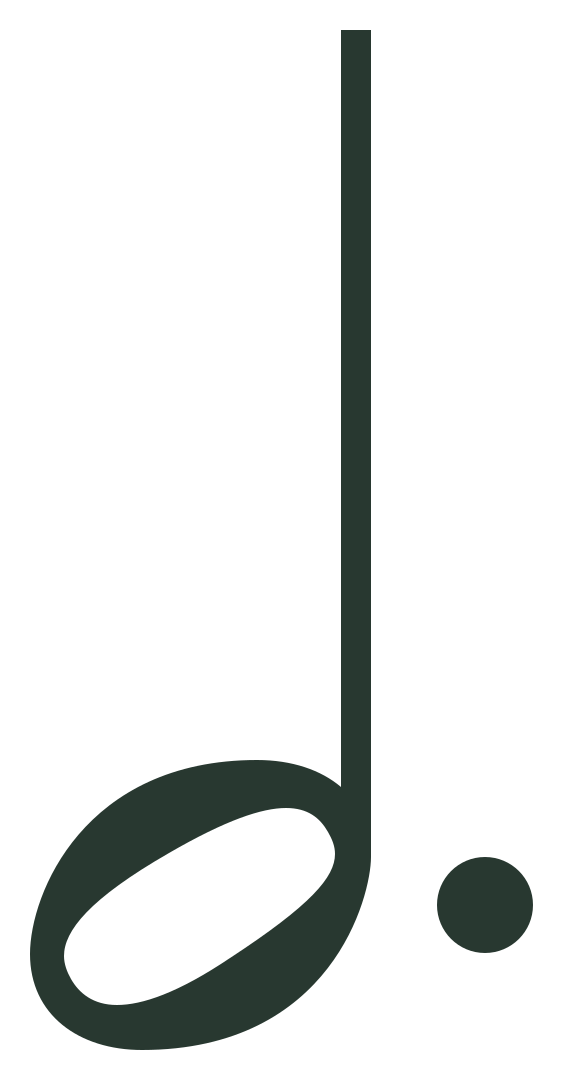 Dotted minim Dotted minim | Equal to three crotchets. |
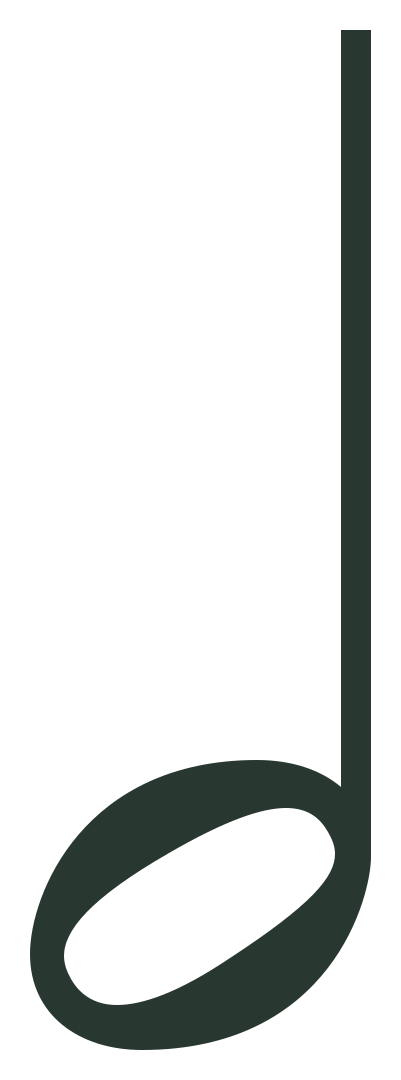 Minim Minim | Equal to two crotchets. |
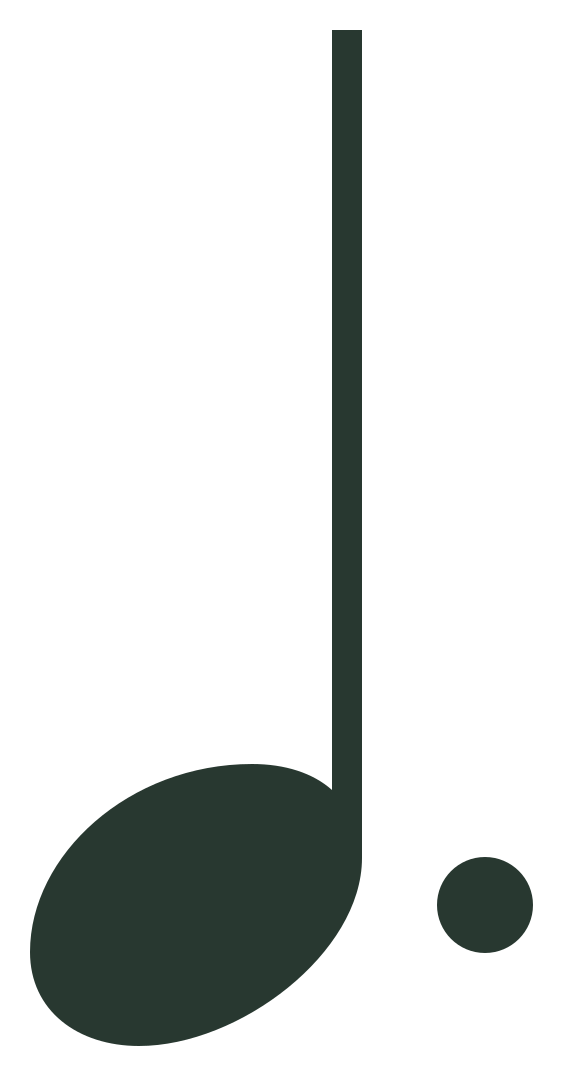 Dotted crotchet Dotted crotchet | Equal to three quavers. |
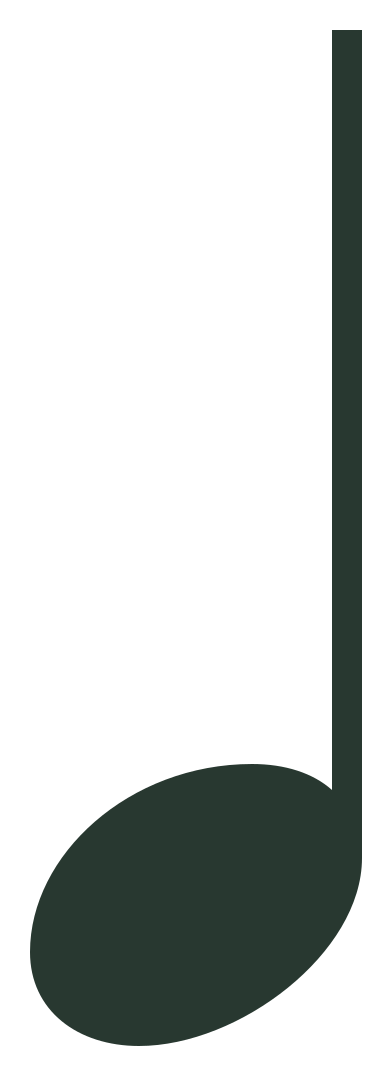 Crotchet Crotchet | Equal to two quavers. |
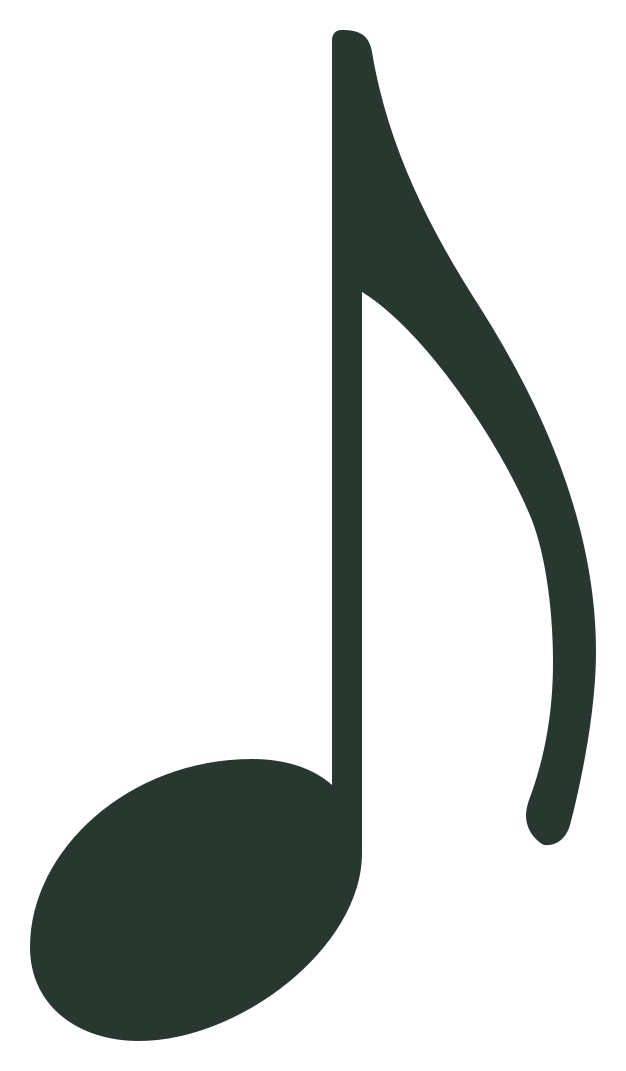 Quaver Quaver | Half the value of a crotchet. |
Rest values
| Value | Relationship |
|---|---|
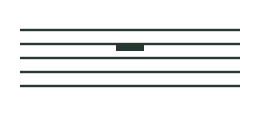 Whole-bar rest Whole-bar rest | One complete bar of silence. |
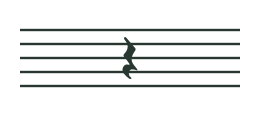 Crotchet rest Crotchet rest | Silence for the value of one crotchet. |
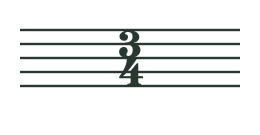
3/4 time: three crotchet beats in a bar. The whole-bar rest, first seen in bar 16, lasts all three beats.
Signs, terms and symbols
| Marking | Meaning | Where |
|---|---|---|
| Metronome mark: 126 crotchet beats per minute. | Beginning |
 | Piano: soft. After the opening mf and crescendo, the p in bar 5 asks you to become soft straight away. The nearby word grazioso means gracefully. | Bar 5 |
 | Mezzo forte: moderately loud. This opening dynamic returns in bar 17. | Bar 1 |
| Grazioso | Grazioso: gracefully. | Beginning; also with p in bar 5 |
| espressivo | Espressivo: expressively. With p in bar 32, play softly and expressively. | Bar 32, second beat |
| dolce | Dolce: sweetly. With p in bar 49, play softly and sweetly. | Bar 49 |
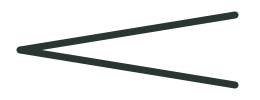 | Crescendo: gradually become louder. | Bars 3 to 4 |
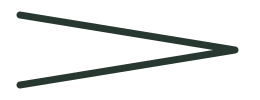 | Diminuendo: gradually become softer. | Bar 44 |
 | Accent: give the note extra emphasis. | Bar 4 |
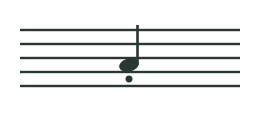 | Staccato: play the note short and detached. | Bar 6, last crotchet |
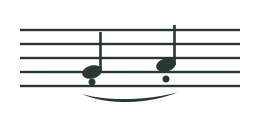 | Staccato under a slur: keep the marked note in the same bow as the other slurred notes, but make it short and detached. In bar 38, only the final quaver has a staccato dot. | Bar 38, final quaver |
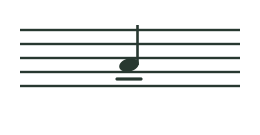 | Tenuto: hold the note for its full written value. | Bar 32, second and third beats |
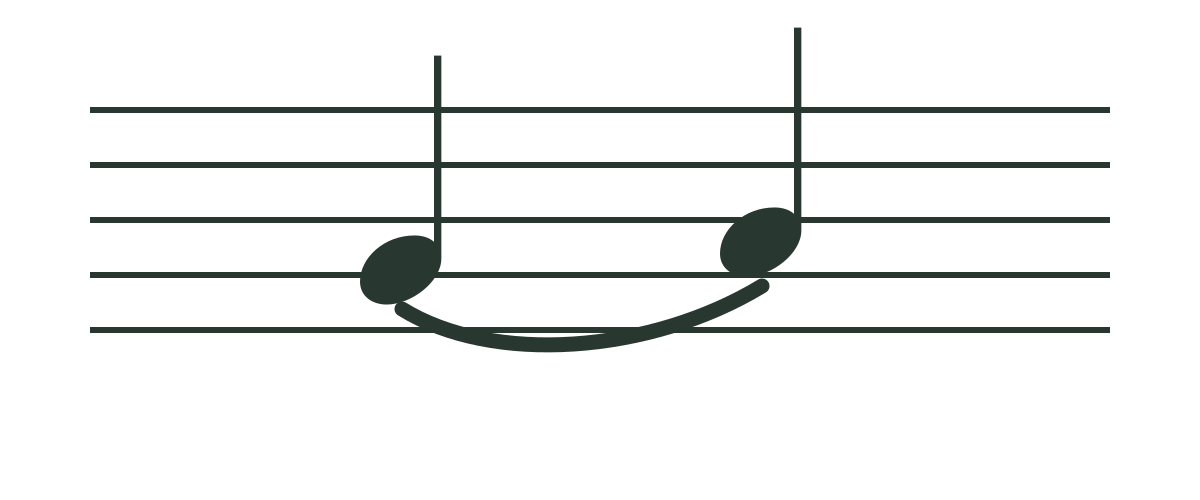 | Slur: play the notes smoothly in one bow. | Bar 1, first four quavers |
 | Down bow: begin the stroke at the frog and move the bow towards the tip. | Bar 1, first note |
| 0 1 2 3 4 | Fingering: the numbers 1 to 4 show which left-hand finger to use. 0 means an open string. | Bar 1 |
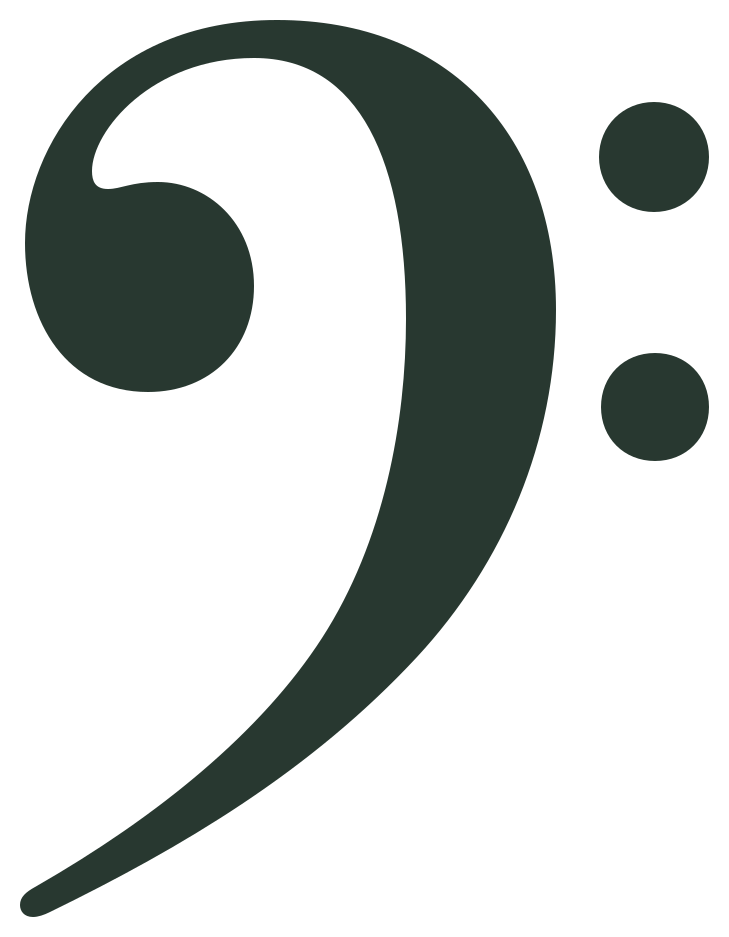 | Bass clef (F clef). | Beginning |
 | Sharp: raises a written note by one semitone. | Bar 42, F sharp |
| 3/4 time: three crotchet beats in a bar. | Beginning |
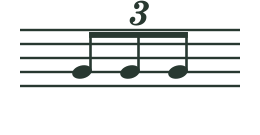 | Quaver triplet: three evenly spaced quavers played in the time of two ordinary quavers. Here, the triplet lasts one crotchet beat. | Bar 6, first beat |
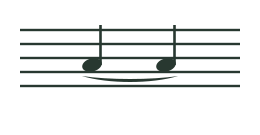 | Tie: join two notes of the same pitch into one longer sound. The tied dotted minim and crotchet in bars 43 to 44 last four crotchet beats altogether. | Bar 43 into bar 44 |
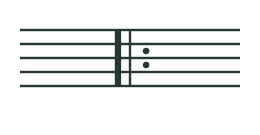 | Start repeat sign: the place to return to when you reach the matching end repeat sign. | Beginning of bar 49 |
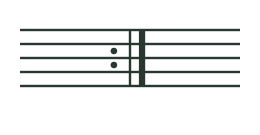 | End repeat sign: go back to the matching start repeat sign. Here, return to bar 49. | End of bar 64 |
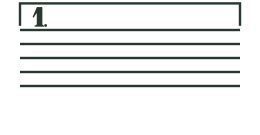 | First-time ending: play this bar the first time through. At the repeat sign at its end, go back to bar 49. | Bar 64 |
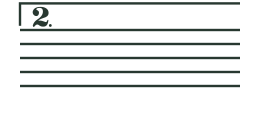 | Second-time ending: on the second time through, skip bar 64 and play bar 65 instead. Then continue into bar 66. | Bar 65 |
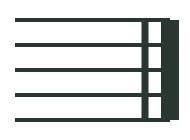 | Marks the end of the piece. | End of bar 97 |
The first-time ending is bar 64; the second-time ending is bar 65.
Key and tonality
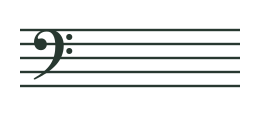
Key: C major.
Key signature: No sharps or flats.
Key changes: Middle section, bars 32 to 65: A minor; Return, bar 66: C major
A minor is the relative minor of C major. Both keys have the same key signature: no sharps or flats.
About the title
Tempo di ballo is Italian for "in dance time" or "in dance style". This piece is No. 1 from Petit album de concert, a French title meaning "small album of concert pieces".
Form
Ternary (ABA)
| Bars | Section | Key | What to notice |
|---|---|---|---|
| 1 to 31 | A | C major | Opening music |
| 32 to 65 | B | A minor | Contrasting middle section |
| 66 to 97 | A | C major | Return of the opening music |
Exam-style questions
- What does the title Tempo di ballo mean?
Show answer
In dance time, or in dance style.
- What key does the piece begin in, and where does it change key?
Show answer
It begins in C major. The middle section, bars 32 to 65, is in A minor. C major returns at bar 66.
- How many beats are there in each bar, and what is each beat worth?
Show answer
There are three crotchet beats in each bar.
- What does Grazioso mean, and what does mean?
Show answer
Grazioso means gracefully. The metronome mark means 126 crotchet beats per minute.
- What happens to the dynamic at bar 5?
Show answer
It suddenly becomes piano (soft), after the crescendo in bars 3 to 4.
- How long is the dotted crotchet in bar 38?
Show answer
One and a half crotchet beats. The quaver after it lasts half a crotchet beat.
- How long do you rest in bar 16?
Show answer
For the whole bar: three crotchet beats.
- What does the small 3 beneath the quavers in bar 6 mean?
Show answer
It marks a triplet. Play the three quavers evenly in one crotchet beat.
- What is the difference between a slur and a tie?
Show answer
A slur asks you to play the notes smoothly in one bow. A tie joins two notes of the same pitch into one longer sound, without starting the note again.
- How do you play the final quaver in bar 38, which has a staccato dot under a slur?
Show answer
Keep it in the same bow as the other slurred notes, but make this last quaver short and detached.
- What does the sharp sign in bar 42 do?
Show answer
It raises F by one semitone, making F sharp.
- How do you use the first- and second-time endings in bars 64 and 65?
Show answer
Play bar 64 the first time, then go back to bar 49. The second time, skip bar 64 and play bar 65 instead. Then continue into bar 66.
This independent study guide is based on the cello part and is not published or endorsed by AMEB. Musical symbol artwork is based on Bravura, the SMuFL reference music font.